


Ford AV and Nanolumens collaborate to design, fabricate and integrate 220-foot continuous custom Nixel Series display
BACKGROUND
George Bush Intercontinental Airport in Houston is Southeast Texas’ primary international gateway, welcoming millions of travelers each year. As part of a significant transformation of Terminal E’s International Central Processor, Houston Airports set out to create a unique architectural digital signage feature that would introduce passengers to the city while operating reliably in a bright, high-traffic environment.
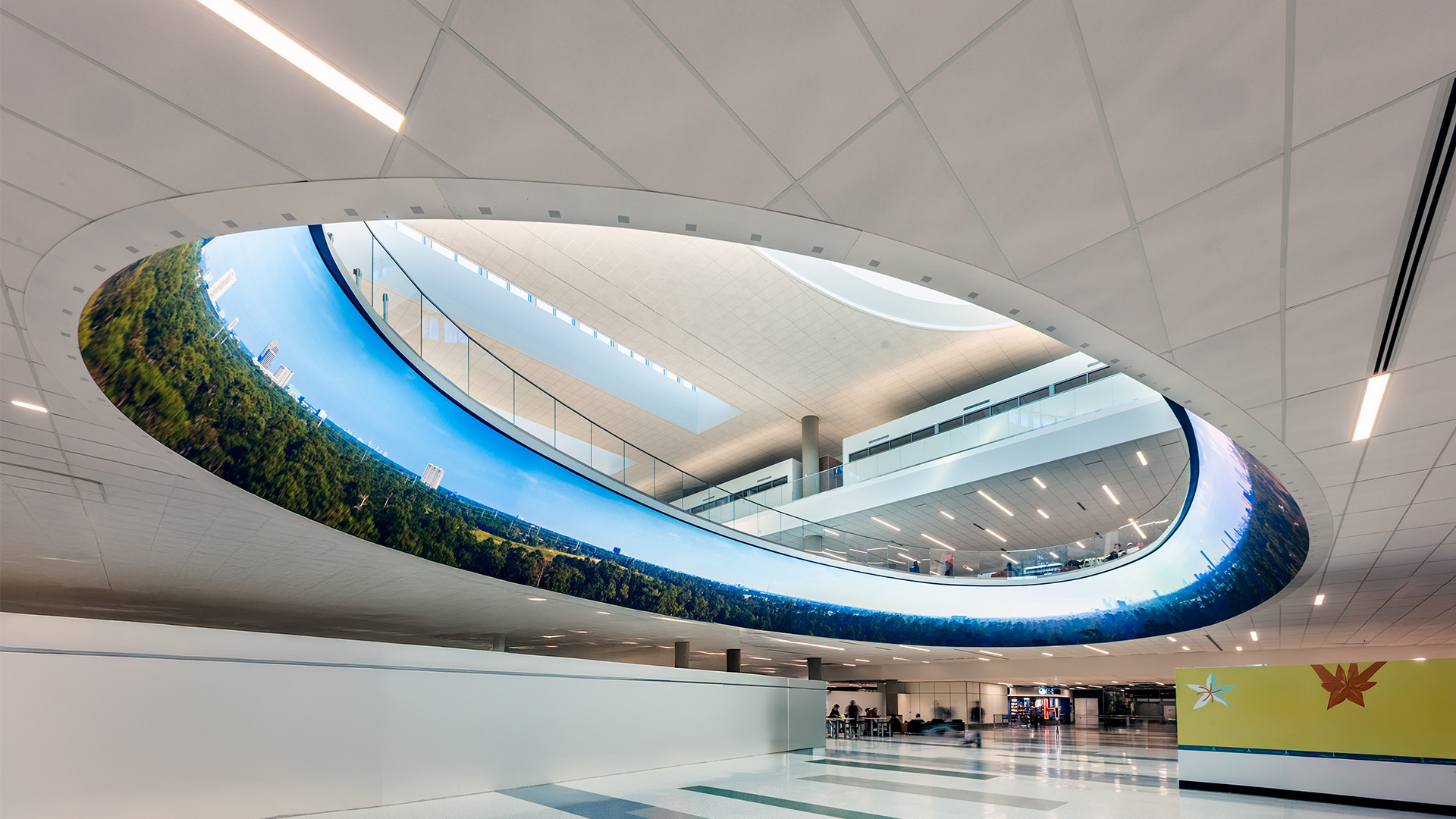
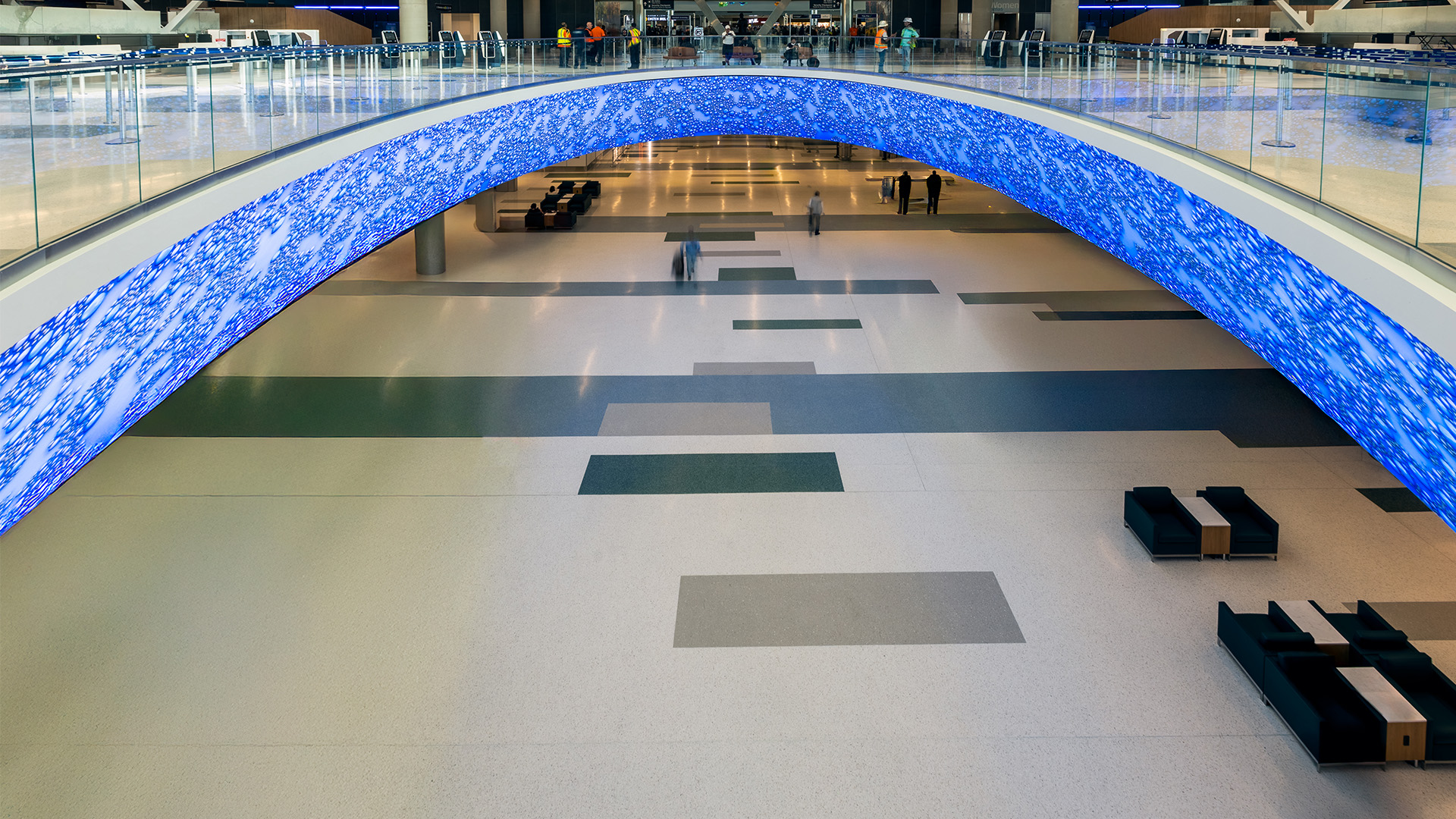
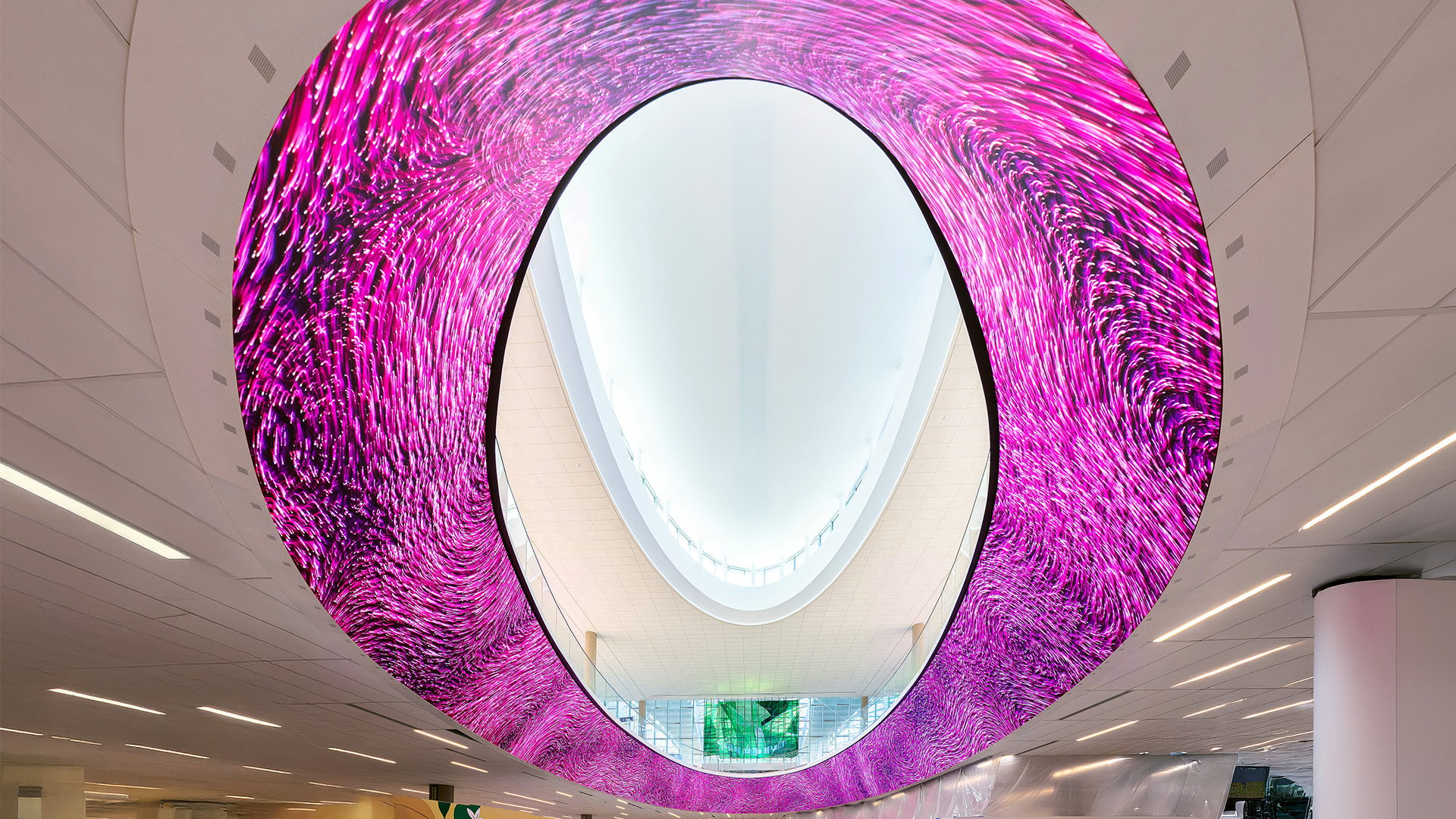
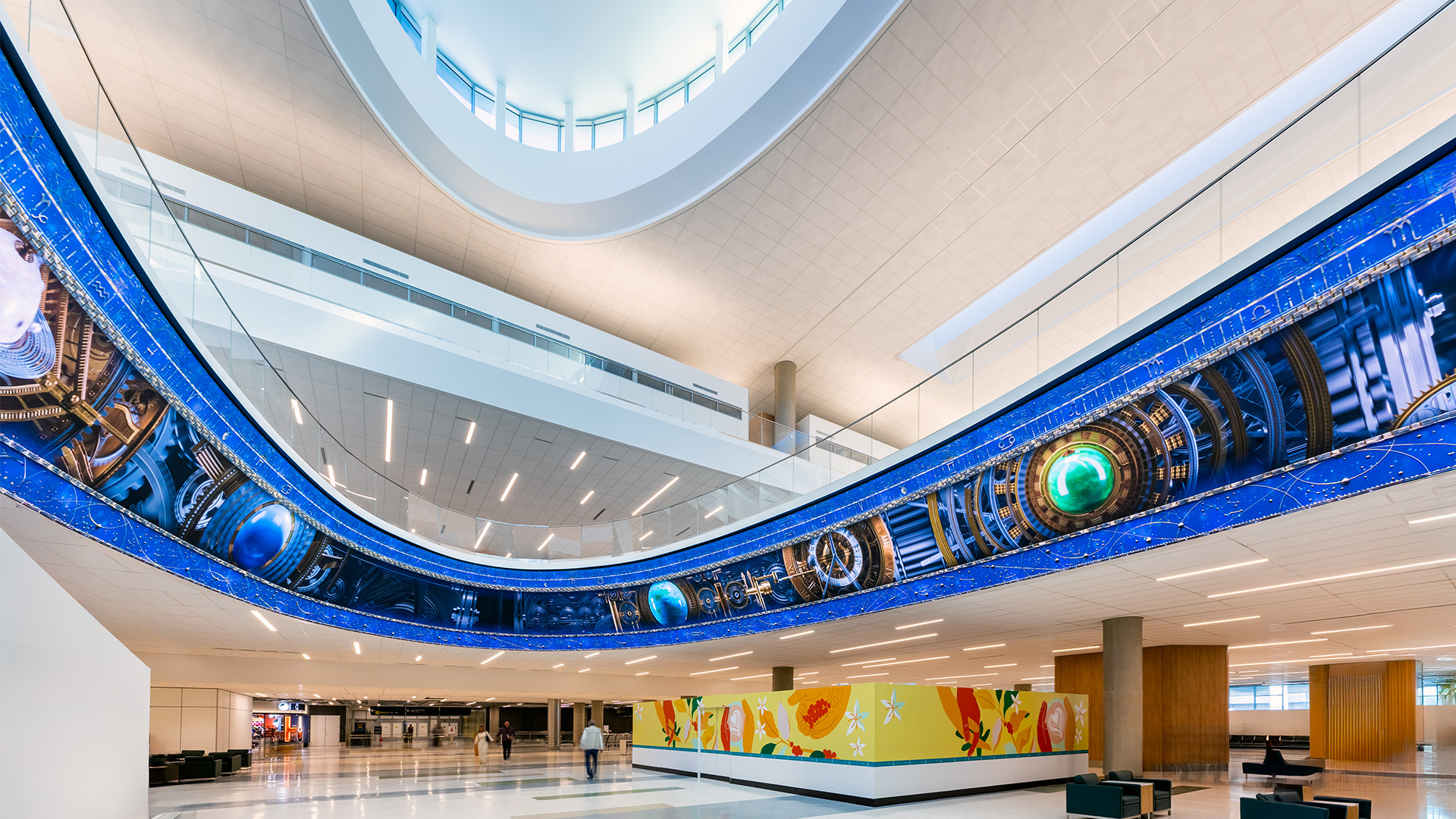
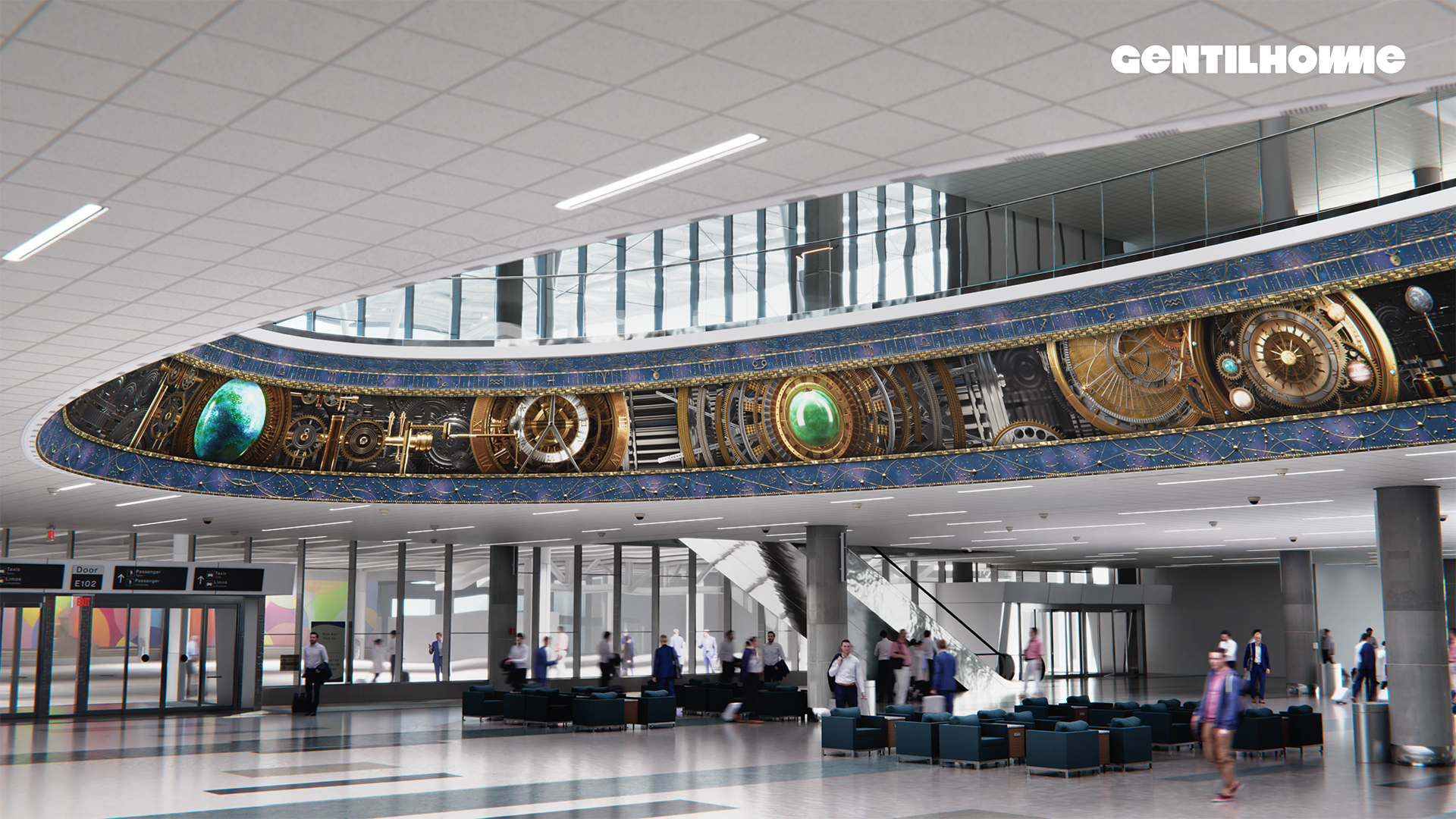
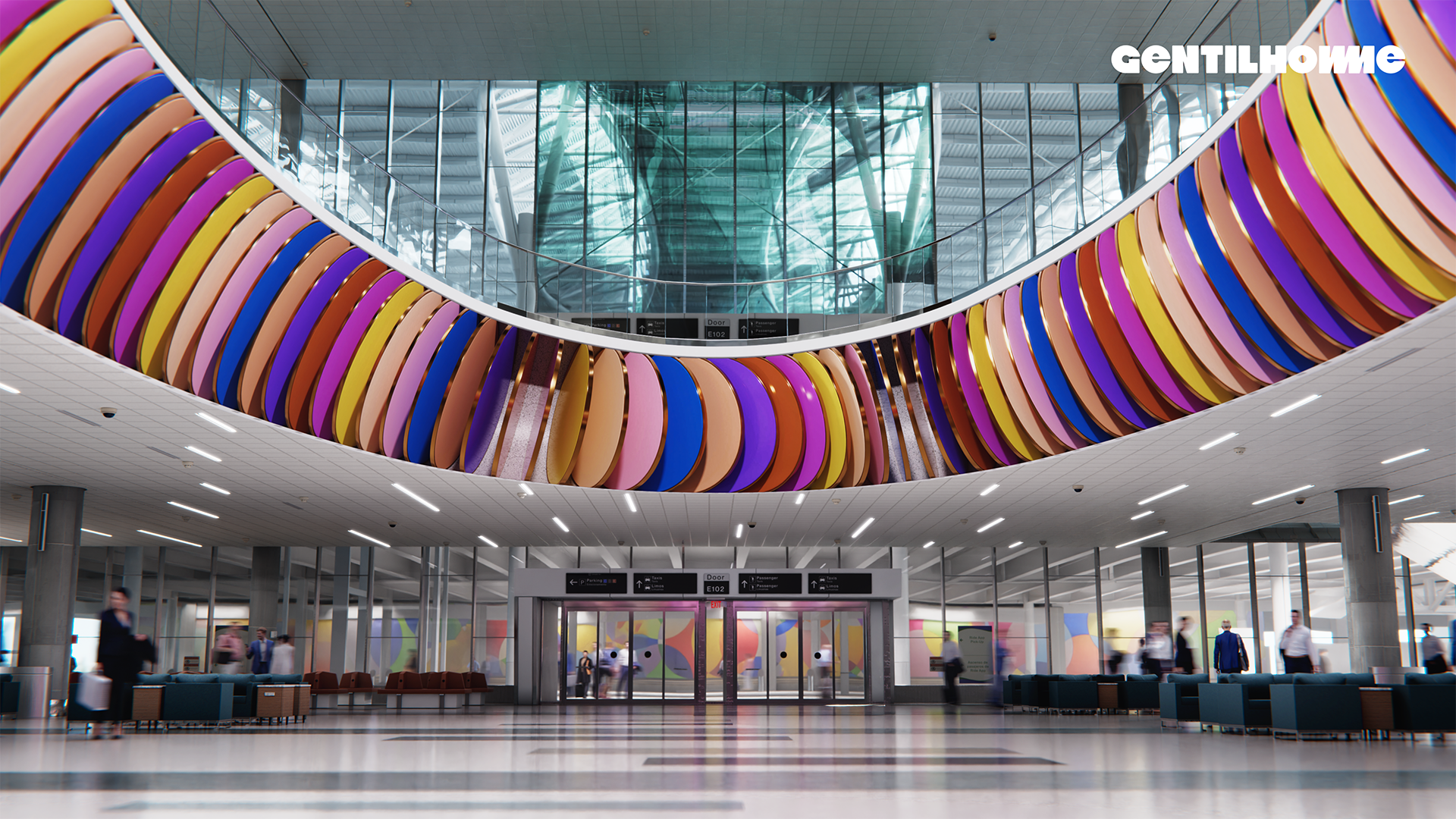
The vision called for a 220-foot rounded, continuous LED structure suspended at a 60-degree angle between the Arrivals and Departures levels. The display would be visible from both floors and positioned directly above passenger circulation, and function as a media canvas and architectural element.
“It is 100% meant to be an element that shares the sense of place for the city of Houston. For many, this is their first experience of Houston and for others, it’s the last thing they see before they leave.”
Darryl Daniel, Chief Technology Officer, Houston Airports
DESIGN
Ford AV, who led system integration for the project and was responsible for installation, content systems and commissioning, selected Nanolumens Nixel Series LED displays and design services due to their history and expertise in engineering nonstandard geometries. Over several years leading up to the project’s introduction, Nanolumens’ Special Projects Group developed 3D models, structural concepts and performance specifications in coordination with HOK, Burns Engineering and other project stakeholders. The design consultation was led by Nanolumens’ Dan Rossborough, director of strategic projects, and pre-contracting services were led by Todd Alan Green, global director of transportation and transit at Nanolumens. Following the award, Nanolumens’ research and development and mechanical engineering teams engineered the custom componentry required to achieve the design intent.
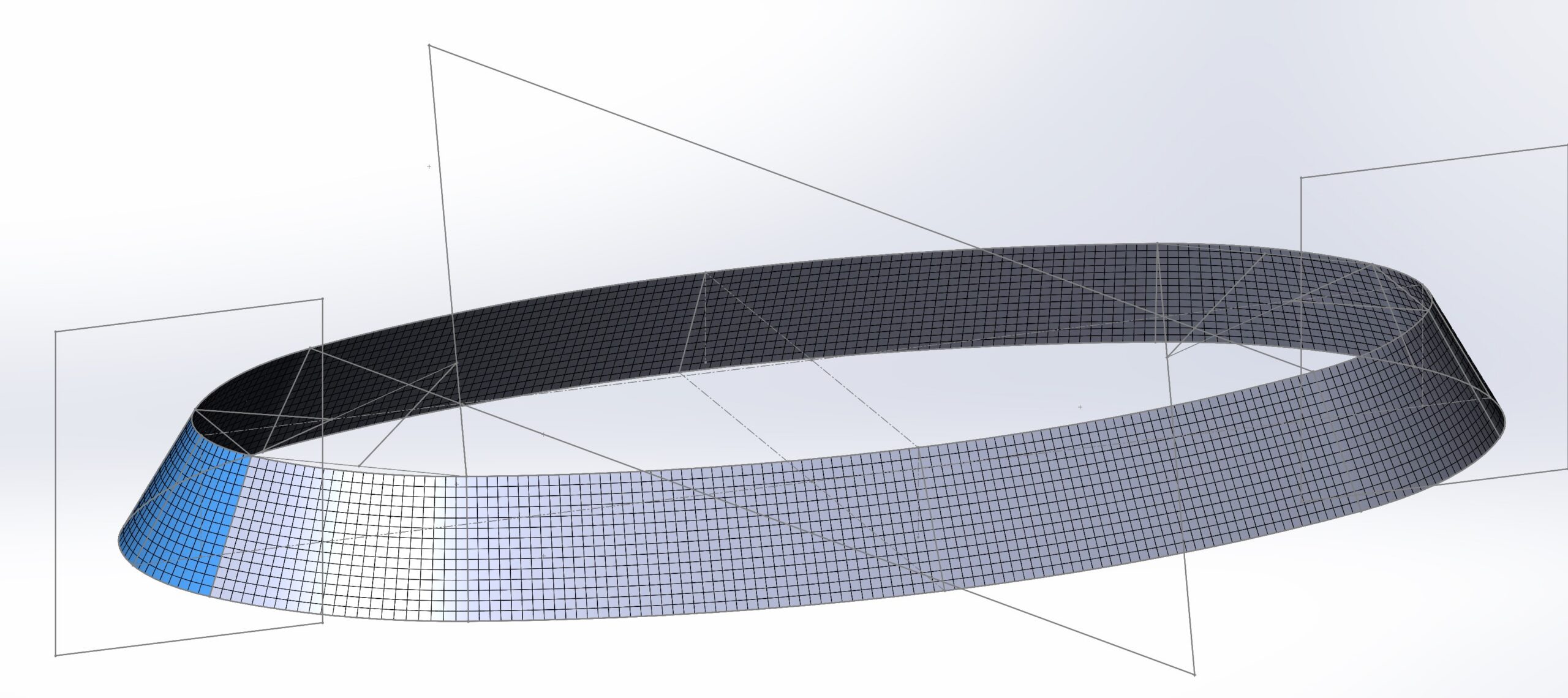
Unlike conventional flat LED video walls constructed from uniform rectangular cabinets, the curved installation, dubbed “Oculus,” forms a truncated elliptical cone composed of smooth, connected arcs. Every surface required precise curvature and standard display modules could not achieve the required geometry. More than 2,000 Nanolumens Nixel Series LED modules were custom-fabricated and positioned within millimeter tolerances. Each module is slightly trapezoidal to preserve the oval form and maintain continuous radii across the structure.
“Nothing about this was off-the-shelf. Every LED cabinet, every pixel alignment, and every curve had to be engineered for this exact shape.”
Ford AV Project Team
To make the complex geometry constructible and maintainable, the design team translated the form into eight arc sections, each built from 36 custom polygonal LED modules. Nanolumens developed nine unique Nixel Series LED frame shapes and fabricated 84 discrete frames to create the seamless sculptural surface. The display measures 93 feet in length and 16 feet in height, with a total linear span of 226.5 feet and approximately 1,955 square feet of LED surface. The modular Nixel system allows front-service access, so individual panels can be replaced without disturbing adjacent sections, a critical requirement in an active international terminal.
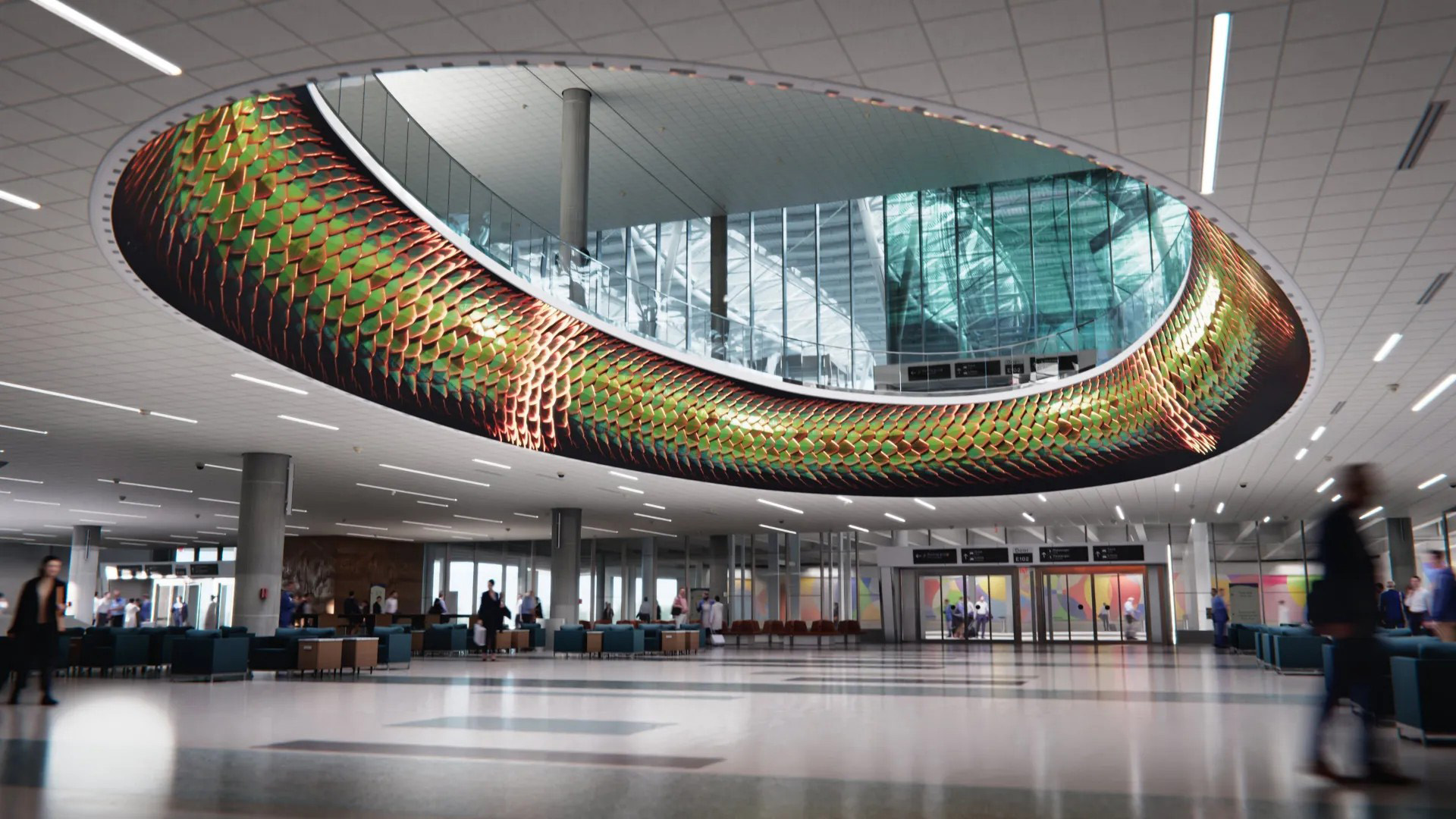
The performance requirements were equally demanding. The Oculus delivers a resolution of 34,584 by 1,416 pixels, totaling nearly 49 million pixels, with pixel pitch ranging from 2.0 millimeters to 1.4 millimeters to support close viewing distances within the concourse. The brightness is calibrated to 800 nits to ensure clarity in the well-lit terminal environment. Each LED module was factory color-matched to maintain uniformity across the curved surface, and Nanolumens engineered and integrated passive and active thermal management systems to support reliable operation in Houston’s hot and humid climate.
DEPLOYMENT
Before full production began, Nanolumens constructed a full-scale factory mockup at its Georgia headquarters to validate mounting systems, panel alignment and image performance. After initial approval, Ford AV rebuilt the mockup in Houston so airport stakeholders could evaluate the installation in-person and the field team could rehearse the precise assembly process required for final deployment.
Beyond its physical form, the Oculus functions as an interactive storytelling platform. Designed by immersive experience studio Gentilhomme, the installation presents 27 content sequences that interpret Houston’s identity through motion graphics, environmental imagery and references to the city’s role in human spaceflight. As passengers move beneath the structure, occupancy sensors capture motion data, which is processed through Pixera’s real-time rendering engine and mapped to the curved LED surface. The result is content that responds dynamically to passenger flow and evolves throughout the day.
The system operates with Pixera media servers and is controlled through Smart Monkeys’ ISSAC platform and Nanolumens’ NanoSuite display control. NanoSuite provides centralized monitoring, scheduling and diagnostics, enabling remote oversight and long-term performance management.
“It was a magical moment. When the panels were installed and we lit them up for the first time, it shifted from being a complicated construction project to an impressive final product.”
Ford AV Project Team
Footage and imagery courtesy of project integration partners Ford AV (www.fordav.com) and Gentilhomme (www.gentilhomme.com).